

Micro-dispensing in medical technology: precision at its finest
Micro-dispensing is a central component of modern medical technology. From precision machining of tiny components to innovative combinations with technologies such as plastic laser welding, it meets the highest demands for accuracy, efficiency and reliability. This article highlights the key applications, current trends and breakthrough technologies that characterise micro-dispensing in medical technology.
Why micro-dispensing is indispensable for modern medical technology
In medical technology, dispensing valves play a key role in the precise micro-dispensing of minute quantities of materials such as greases, silicone oils or UV adhesives.
Typical areas of application are:
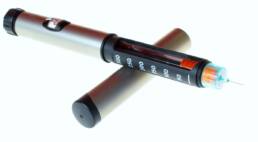
- The lubrication of dosing mechanisms in autoinjectors such as insulin pens
- The assembly of syringes or needles with UV adhesives
- The siliconization of injection needles or spray attachments for nasal spray bottles
- Precise filling of silicone molds with active pharmaceutical ingredients (APIs) during the production of microneedle patches
These high-precision processes enable the reliable operation of devices that are essential for patient care. The demand for micro-dispensing technologies in medical technology is expected to grow steadily over the next few years.
Needles, wearables or surgical instruments: The applications are diverse
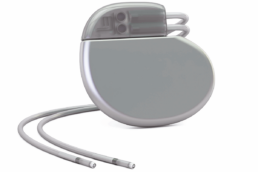
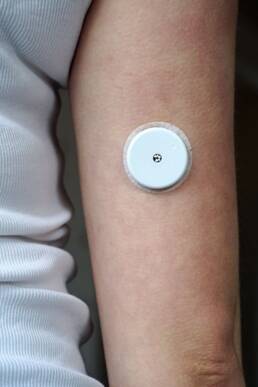
Whether for implants such as pacemakers, wearable devices such as insulin pumps and hearing aids or the manufacture of surgical instruments - micro-dispensing is crucial for connecting and treating delicate components. The use of biocompatible media is becoming increasingly important.
Underdosing can compromise the stability of components, while overdosing can lead to malfunctions. This is particularly important in the manufacture of wearable devices, where microscopic amounts of adhesive must be precisely metered to avoid damaging sensitive electronics.
A further application is the coating of surgical instruments with protective coatings or lubricants to improve their performance and reduce the risk of infection. Experts estimate that around 90% of surgical instruments receive special coatings or lubricants during production. (Source: Journal of Medical Device Manufacturing, 2021).
Microfluidics and lab-on-a-chip technologies
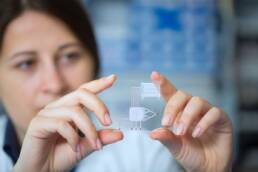
Microfluidic chips and lab-on-a-chip systems also benefit from micro-dispensing. These technologies enable minimally invasive diagnostics and treatment.
The extreme precision of micro-dispensing allows fluids in quantities of just a few nanolitres to be dispensed accurately. This promotes the miniaturisation of medical devices, which is particularly important in-patient care. (Sources: rsc.org; Alleima - the miniaturization of medical devices).
How micro-dispensing achieves fine structures with precision
Piezo technology for non-contactless jet dispensing is particularly interesting as it enables extremely fast and precise dispensing processes. Despite these advantages, many production systems continue to rely on contact methods. In these approaches, the dispensing needle is positioned close to the target surface in order to deposit material.
Contact dispensing also has its merits
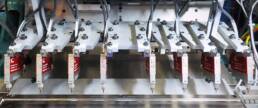
A typical example of a contact process is the processing of glass cannulas. Here, multiple cannulas are processed simultaneously, with the dispensing needles moving in close proximity to the components and droplets being precisely wiped off. This method is well suited to applications with clearly defined geometries.
Non-contact dispensing for complex geometries
On the other hand, non-contact jetting offers clear advantages for complicated components, complex geometries or shorter cycle times. Jet dispensing shows its strengths particularly for components with structured surfaces, such as grooved spindles in retractable syringe systems. It enables liquids to be applied introduced directly into fine structures without mechanical impairment. Thanks to this versatility, non-contact jetting with piezo technology is a favoured solution for demanding dispensing applications where speed and precision are crucial.
No solution yet for your dispensing challenge?
We're here to help – working closely with your team to develop a customised micro dispensing solution.
Sustainable dispensing solutions: trends in medical technology
A clear trend in medical technology is the increasing use of UV adhesives. They offer significant advantages:
- Shorter production times: UV adhesives cure in just a few seconds.
- Lower energy consumption: LED lamps with low power are sufficient to initiate the curing process.
Switching to UV adhesives increases efficiency and shortens production time. By saving on ovens, energy and production space, production costs can also be reduced.
Demographic change and growing demand
Demographic change is having a major impact on medical technology. By 2050, the number of elderly people worldwide will increase by 60%. Rising life expectancy and the increase in chronic diseases will continue to drive demand for medical products. The need for devices such as syringes, diagnostic systems and delivery mechanisms will continue to grow. Disposable products will play a key role, already accounting for 65% of medical device sales. (Source: WHO Report, 2022).
Micro-dispensing and laser welding: a winning team
Micro-dispensing and laser welding complement each other in medical device manufacturing processes. Micro-dispensing is often used prior to laser welding to precisely apply liquid fillers or protective materials that optimise welding quality. Particularly in microsystem technology, for example in the manufacture of microfluidic chips, the two technologies work hand in hand: liquid reagents are precisely metered before the chip is sealed by laser welding.
Is it a recent trend?
Micro-dispensing and laser welding are not completely new technologies, but they are experiencing a significant boost in the field of medical technology.
The focus on miniaturisation, biocompatible materials and maximum precision has made these processes particularly popular in recent years. According to a market analysis by Statista, demand for laser welding systems in medical technology has risen by 40% since 2018. (Source: Statista, 2023). It is foreseeable that this trend will continue to gain in importance.
How micro-dispensing will have a lasting impact on medical technology
In summary, these developments show that medical technology is not only an industry with a promising future but is also continuing to grow thanks to innovative technologies such as UV adhesives and the increasing demand for medical products. marco systems is at the forefront of this growing market with efficient and sustainable solutions that are perfectly tailored to the requirements of the industry.
Thanks to continuous research and development, we are constantly making progress in dispensing and production technology. These innovations not only enable us to fullfil the complex requirements of medical technology, but also to make production processes more efficient. Whether in the manufacture of spray systems, needle systems or specialised medical devices - our solutions set new standards for quality and precision and open up pioneering perspectives for the industry.
Do you have any questions? We can help you. Write to us directly?
Further insights into the topic can be found in the article by Jamal H. and Köhler C., "Bonding Technologies for Injection Devices - a Quick Overview". ONdrugDelivery, Issue 168 (Jan 2025), pp 44-48.